
End of Season Wrap
At the end of May we wrapped up our second season in Triton Bay. It started in late September last year with the biggest El Nino’s ever wrecking havoc on the global climate. Triton Bay saw colder than normal water temperatures to start the season and a long stretch of many months without much rain. We focused on nudibranchs and other critters as they seemed to come out with the colder water, however by February the water had begun to warm and the rains came. Triton Bay did not escape the effects of the El Nino, as in the last month of the season many of the coral in the shallows were bleached. We hope that the changing of the seasons in June and colder water coming in from the south will be timely enough to reverse the bleaching and will know in a few months.
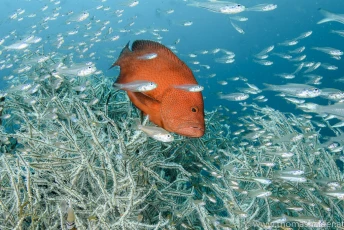
This past season we explored Triton Bay a bit more, found a few more dive sites, and discovered a few new critters, 2 of them being the sailfin anthias and Bulbonaricus pipefish – big thanks to Ned & Anna DeLoach and the crew of the Dewi Nusantara! If you’ve never heard of either of these fish, don’t worry neither have most divers. We even heard that a diver aboard one of the visiting liveaboards saw and photographed a rhinopia, which we believe has never been seen before in Triton Bay. But there is still a lot waiting to be discovered, and we hope to be able to do a bit more exploratory diving with guests who have the time and inclination to do so.
Among the visitors we had the pleasure of hosting were some amazing photographers, with select photos of theirs added to our Guest Galleries. A few visitors were part of the very first exploratory trip to Triton Bay in 2006 and came back to see the place they had such fond memories of. It was amazing to hear their stories of the beginning. We had visitors from the first season who came back to see us after less than a year. We had families with young children and certified a whole family of new Open Water divers! We even hosted Indonesian government officials and generals, including the military commander of West Papua!
On the marketing side, we took part in trade shows in Hong Kong and Deep Indonesia in Jakarta. We were represented at the Boot show in Germany via an agent, and need to give out a special thanks to Connie, a guest from the first season, who helped represent us there. We look forward to hosting all the friends we met at the these trade shows at the resort some time in the not too distant future!
It is June now and we have begun construction of two more bungalows, which should be ready to house new guests by the beginning of next season. Updates as usual will be through FaceBook.
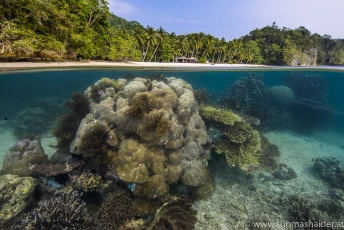
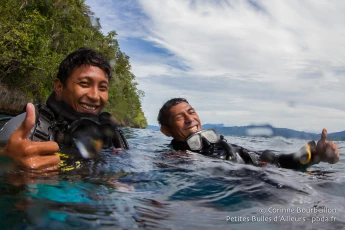
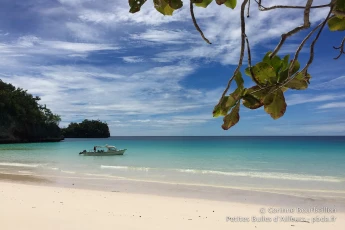
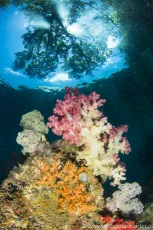
Below is a gallery of some of our favorite photos that were never posted onto either Facebook or the Guest Galleries:
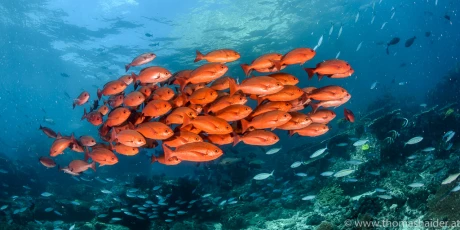
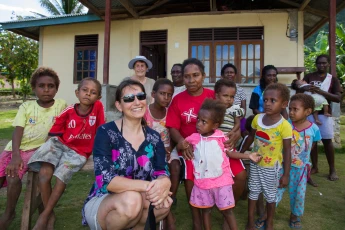
Blessing Ceremony
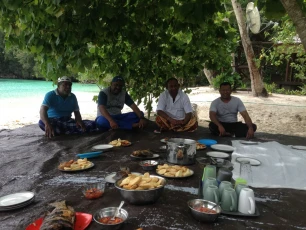
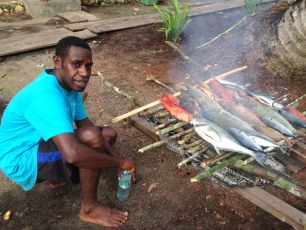
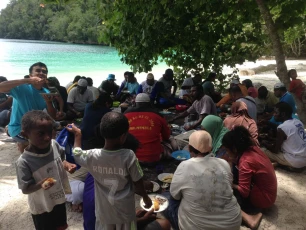
We had some down time at the resort at the end of January and so our Papuan partners performed a traditional blessing ceremony for the land. It was a short, simple ceremony that involved some prayers in Arabic (they are Muslim), some offerings (including four roosters to be sacrificed), and a big lunch for everyone involved. It may have been a little late, but we’re happy to have had it done and everything is proper to everyone’s satisfaction.
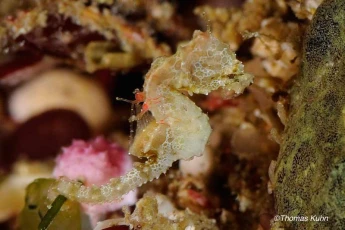
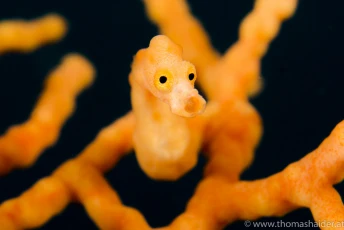
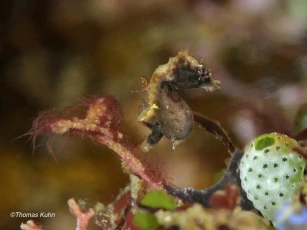
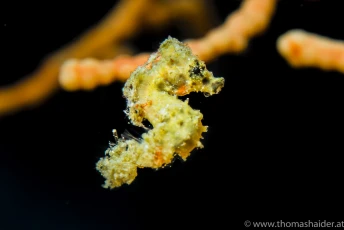
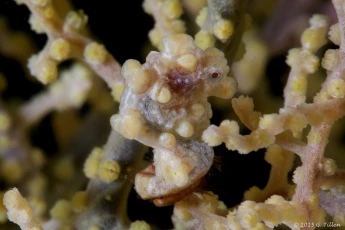
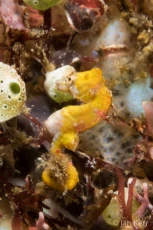
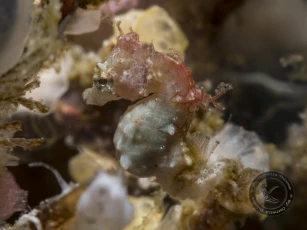
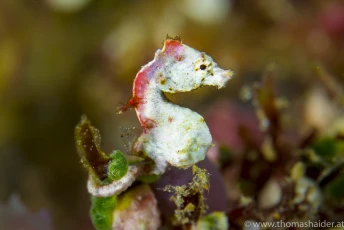
Pygmy Seahorses of Triton Bay
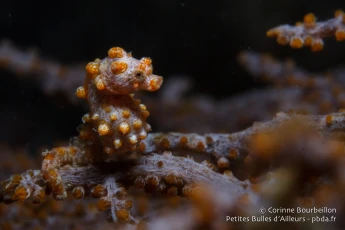
We had another post last year about Triton Bay being a paradise for pygmy seahorses, but that blog entry really only featured the very common purple Bargibanti species. Since we’ve been seeing a lot of different species recently its time for an update. In addition to the Bargibanti, we’ve seen: Pontohi, Severns, Denise, Satomi, and possibly Colemani, but these creatures are so small its difficult to be certain which is which, though we’ve done our best to identify them. Photo credits to our guests: Connie Thieme, Gordon Tillen, Ian Kerr, Thomas Kuhn, and Thomas Haider.
Triton Bay Divers in SilentWorld
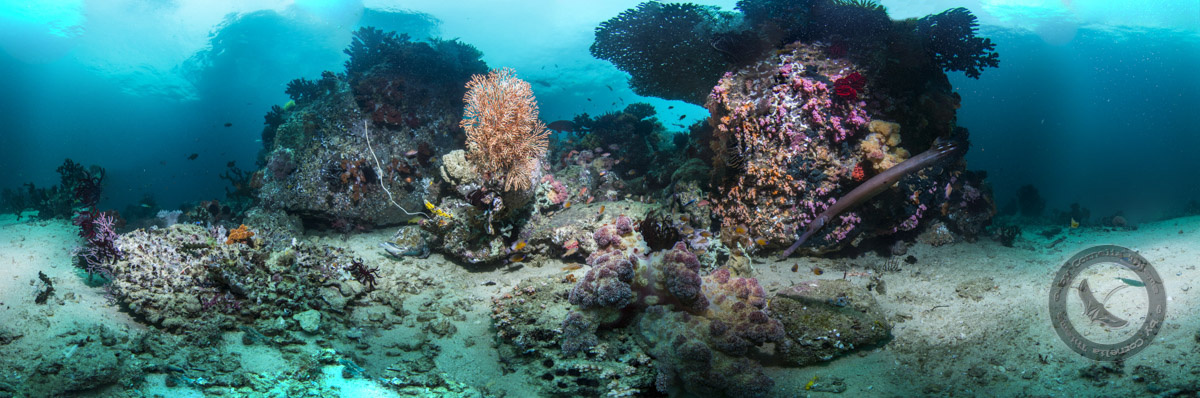
Above photo: underwater 360 degree panoramic of Christmas Rock, one of Triton Bay’s better known dive sites.
For German readers, below is an article by Connie Thieme in the most recent SilentWorld magazine about her stay with us earlier this year. Thank you Connie for sharing the article, and to AquaVenture for arranging her visit.
Connie missed almost a week of diving due to illness, but still managed to put together some incredible photos (including the picture above), which can be seen in our Guest Galleries or on her website Marine-Snapshots. Look for the black light (UV) shots of various marine animals and corals, and the photo of the Pontohi pygmy seahorse is as good a picture as you’re going to see of these elusive creatures.
El Nino: Impact on West Papua & Coral Bleaching
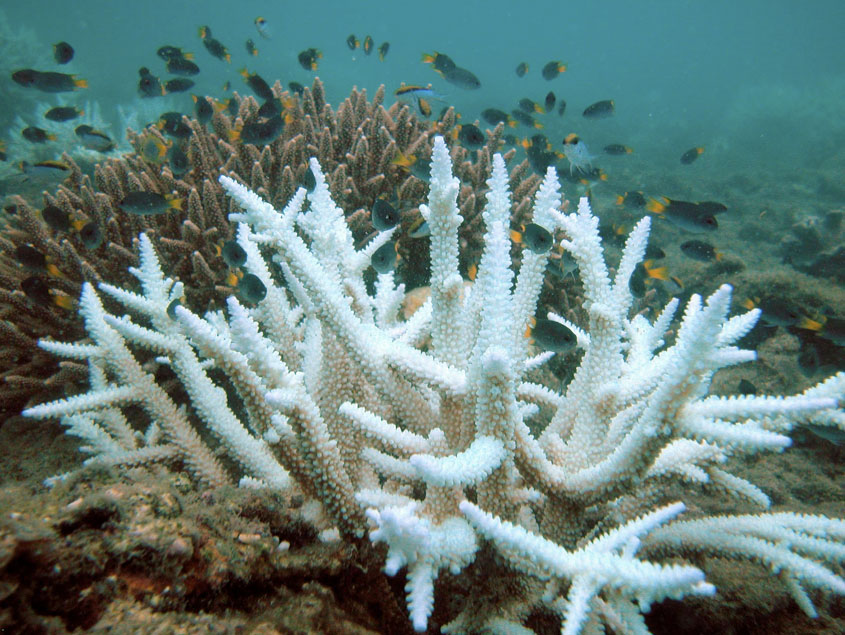
El Nino refers to the warming of the eastern Pacific Ocean along the equator from the International Date line to around the west coast of South America. It impacts weather and water temperature around the world and we have begun to see the effects of the current one. Expected to persist throughout the winter of 2015-16, this El Nino will be the strongest yet according to scientists.
Weather
In Indonesia, a strong impact has already been felt. Although the waters of the eastern Pacific are warming, the waters of the western Pacific are cooling, as we can attest to. In Triton Bay, we saw water temperature around 23 degrees in Sept, 2~3 degrees colder than normal for this time of the year. The other major impact is on rainfall. Southern California is expected to get much needed rainfall, but drought is widespread throughout Indonesia. In our neighbouring country of Papua New Guinea the drought is now 3 months, crops are failing, and water shortages are a major problem. West Papua, the Indonesian province where we are located, shares the island of New Guinea with the country of Papua New Guinea.
So is El Nino related to climate change? There is no consensus as more data is required, but as with the Polar Vortex during the winter of 2013~14 (which we blogged about here), what is not in doubt is that we are seeing more frequent extreme weather events, and the combination of these two phenomena will have a devastating effect on the world’s coral reefs.
Coral Bleaching
Coral is actually made up of organisms called polyps, and these polyps have microscopic algae called zooxanthellae which carry out photosynthesis, give coral their color, and help the corals build reef structures. Under certain “stressful” conditions (for example, changes in water temp, salinity, oxygen levels, and the presence of herbicides and even sunscreen ingredients), the coral polyps will expel the zooxanthellae. When ocean surface temperatures rise for an extended period, the zooxanthellae are expelled and the coral lose their color and appear to be “bleached”. If the zooxanthellae do not eventually return, the coral polyps will die off. Studies have shown that coral bleaching has occurred when water temperature rises as little as 1 degree above the normal summer maximum, though the temperature at which coral colonies bleach differs from location to location.
On October 8, the US National Oceanic and Atmospheric Administration (NOAA) declared the onset of the third global bleaching event this year. The first two global bleaching events, in 1998 and 2010, were both El Nino years and this third mass bleaching event is expected to be the biggest yet, impacting more than one third of all coral reefs around the world. Already rising ocean water temperature due to climate change coupled with El Nino conditions are the two main factors. Coral bleaching has already hit Hawaii hard this year, and is spreading to Florida and the Carribean. By next year, due to El Nino, coral bleaching will spread to the Indian Ocean (Maldives) and the south-eastern Pacific (Australia’s Great Barrier Reef).
Why is this a problem? Because coral reefs, which cover less than 0.1% of the ocean floor, are some of the most biodiverse environments on the planet and are home to countless species of fish and coral. The loss of these reefs would damage the fisheries that help to support hundreds of millions worldwide as well as the tourism industry, which is one of the best drivers of sustainable development in developing countries. Reefs also act as natural barriers that protect coastlines from flooding and erosion, and the organisms found on reefs have the potential to provide new medicines to science.
What Can be Done?
According to Jennifer Koss, acting program manager for NOAA’s Coral Reef Conservation Program, “We need to act locally and think globally to address these bleaching events. Locally produced threats to coral, such as pollution from the land and unsustainable fishing practices, stress the health of corals and decrease the likelihood that corals can either resist bleaching, or recover from it. To solve the long-term, global problem, however, we need to better understand how to reduce the unnatural carbon dioxide levels that are the major driver of the warming.”
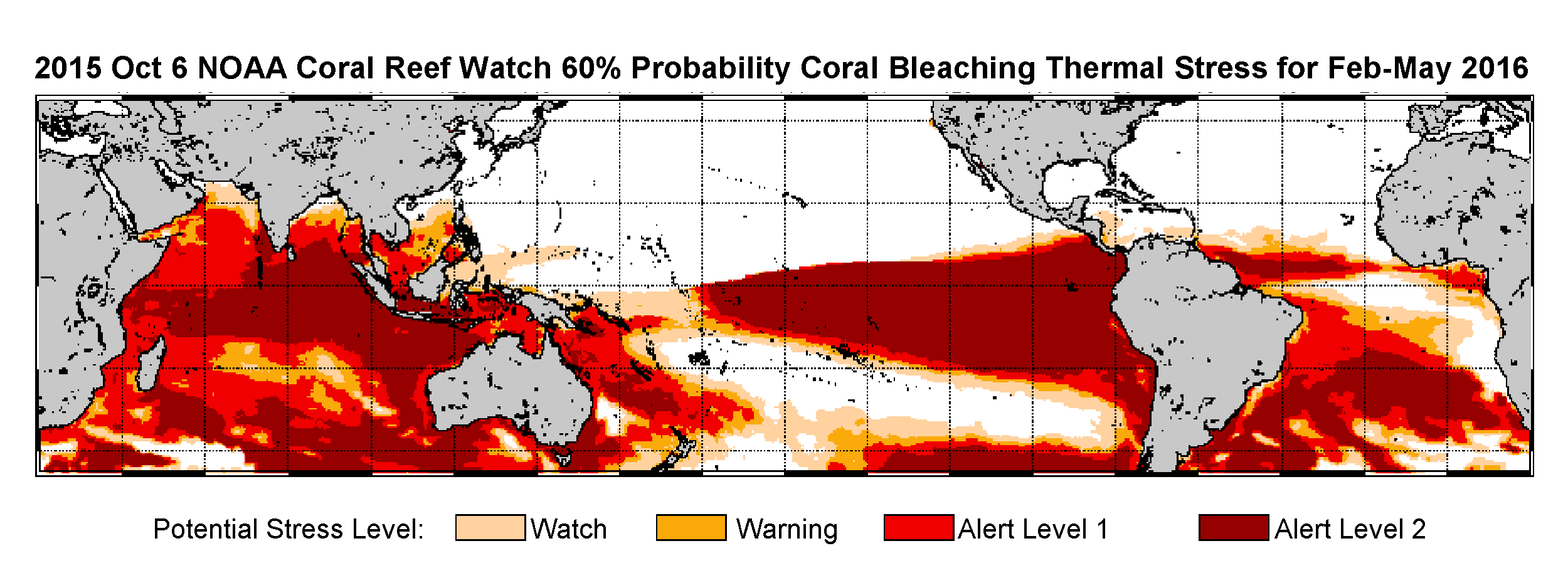
Here are some articles we researched for this blog post:
4 million in the Pacific without food or drinking water
El Nino from the other side of the Pacific pond
Massive Coral Bleaching Event Underway
NOAA declares third bleaching event